
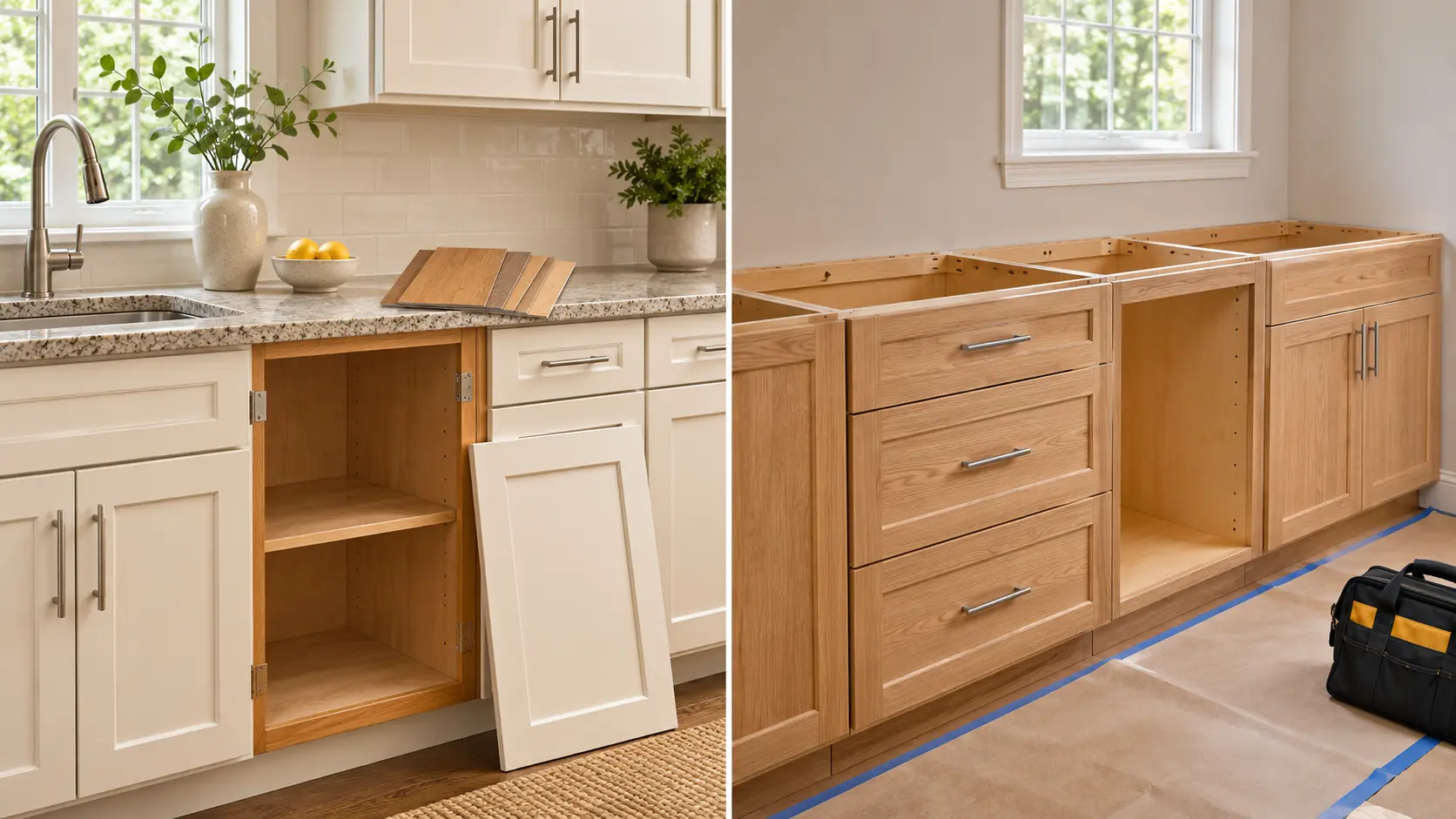
Dated cabinet doors can make an entire kitchen feel older than it is, even when the countertops and appliances still work well. For homeowners planning kitchen remodeling, pricing a cabinet update often brings two different recommendations. One contractor suggests new doors and drawer fronts, while another recommends removing the cabinets and starting fresh.
The choice between cabinet refacing vs replacement comes down to what lies behind the doors. Refacing makes sense when the cabinet boxes are solid and the layout works, typically costing less and taking less time. Replacement is the better option when the boxes are damaged, storage is limited, or the layout needs to change, because new cabinets address problems that updated fronts cannot fix.
Both options can give your kitchen a fresh look. The right choice depends on your budget, timeline, cabinet condition, and how you use the space. Comparing these factors helps you decide which approach fits your kitchen.
What Cabinet Refacing and Cabinet Replacement Involve
Both projects change the look of a kitchen, but they start from very different points. Refacing keeps the existing cabinet structure, while replacement removes it entirely.
Cabinet Refacing
Refacing keeps the existing cabinet boxes in place and updates everything visible. Installers cover the face frames and exposed sides with wood veneer, rigid thermofoil or laminate, then add new doors, drawer fronts, hinges and hardware. The layout, countertops and plumbing usually stay exactly where they are.
Cabinet Replacement
Replacement removes the old cabinets completely and installs new boxes, doors and drawers. The new cabinets can follow the same layout or a new one, and they often come with upgraded interiors such as pullouts, deep drawers and taller upper cabinets. Countertops usually need replacement as well, since they rarely survive removal intact.
Round 1: Cost
Cost is the main reason homeowners consider refacing in the first place. Typical prices for a kitchen of about 10 by 12 feet compare as follows:
Cabinet refacing: $5,000 to $15,000
Premium wood veneer refacing: up to $20,000
Stock replacement cabinets: $5,000 to $12,000 before installation
Semi-custom replacement cabinets: $12,000 to $25,000
Custom replacement cabinets: $25,000 to $50,000 or more
Priced by length, refacing usually runs about $150 to $500 per linear foot of cabinetry. Replacement cabinets typically cost $200 to $1,000 or more per linear foot installed, depending on the cabinet grade.
Replacement also brings costs beyond the cabinets, including demolition, new countertops at $3,000 to $7,500, plumbing reconnection and backsplash repairs. Refacing usually costs 30% to 50% less than a comparable replacement once these extras are included.
Winner: Cabinet refacing.
Round 2: Durability and Lifespan
Cabinet boxes carry the weight of dishes, countertops and daily use, and well-built boxes last for decades. Solid wood and plywood construction hold up the longest, with an estimated life expectancy of 50 years for kitchen cabinets.
Refacing adds new surfaces to old boxes, which means the results last only as long as the structure underneath. Boxes with water damage under the sink, sagging shelves or crumbling particleboard will continue to fail behind fresh doors. Replacement starts the clock over with new boxes, new hardware and modern construction such as all-plywood cases and full-extension drawer slides.
Winner: Cabinet replacement.
Round 3: Timeline and Disruption
Refacing usually takes three to five days on site, and the kitchen stays partly usable throughout the work. Countertops, sinks and appliances remain connected, which lets families keep cooking with only minor interruptions.
Replacement takes much longer. Semi-custom and custom cabinets often need four to 12 weeks of lead time after ordering, and installation with new countertops typically takes two to four weeks. The kitchen is usually out of service for most of that installation period.
Winner: Cabinet refacing.
Round 4: Layout and Storage Flexibility
Refacing keeps the existing cabinet footprint, including any layout problems that came with it. Replacement opens up changes that refacing cannot make, including:
New Layouts: Cabinets can move to create an island, a better work triangle or an open connection to the dining room. These changes often solve long-standing traffic and workspace problems.
Smarter Storage: Deep drawers, pullout pantries, tray dividers and corner solutions replace hard-to-reach shelves. Storage capacity can increase without adding square footage.
Taller and Larger Cabinets: Upper cabinets can extend to the ceiling, and new sizes can fit modern appliances. Oversized refrigerators and wall ovens often need cabinet changes to fit properly.
Accessibility Upgrades: Lower wall cabinets, drawer bases and pullout shelves make the kitchen easier to use for all ages. These features help households planning to stay in their homes long term.
Kitchens that feel cramped or poorly organized rarely improve with new doors alone. Replacement fixes the function as well as the look.
Winner: Cabinet replacement.
Storage problems are often the real reason homeowners start thinking about new cabinets. Our kitchen remodeling work covers layout improvements and storage solutions along with cabinet and countertop updates, and we plan the work around the way the household cooks and stores food. They end up with a kitchen that works better day to day, not only one that looks newer.
Round 5: Environmental Impact
Refacing keeps the existing cabinet boxes out of the waste stream and uses fewer new materials. Replacement sends full sets of cabinets to disposal, along with old countertops and packaging.
Waste from the category that includes cabinets adds up quickly. Furniture and furnishings totaled 12.1 million tons of municipal waste in 2018, and the majority of this product sector was landfilled (80.1%). Homeowners focused on reducing waste gain a clear advantage from reusing sound cabinet boxes.
Winner: Cabinet refacing.
Round 6: Design Options
Both options can deliver a modern style, but replacement offers more room for change. The two approaches differ in the range of finishes and features available.
Refacing Styles
Refacing offers a wide choice of door styles, including Shaker, flat-panel and raised-panel doors, plus new hardware and soft-close hinges. The surface material sets both the price and the lifespan of the new finish. Rigid thermofoil is the most affordable choice and resists moisture well, though it can peel near high heat. Laminate costs slightly more and handles daily wear and cleaning well. Real wood veneer costs the most and gives the closest match to solid wood cabinets. Whichever material homeowners choose, the design still has to work within the existing cabinet sizes and face frames.
Replacement Styles
Replacement allows any door style, finish, material and configuration, including frameless European cabinets, glass-front uppers, open shelving and contrasting island colors. Homeowners can match cabinets exactly to new appliances and layouts.
Winner: Cabinet replacement.
Round 7: Resale Value
Buyers notice kitchen updates, but large investments rarely return their full cost at sale. Smaller, cosmetic projects consistently recover a higher share of what homeowners spend.
Refacing falls into this lower-cost group, and a minor kitchen remodel recoups over 100% of its cost in increased home value. Full replacement as part of a major remodel adds more value in dollars but returns a smaller share of the money spent. Homeowners planning to sell within a few years usually come out ahead with refacing.
Winner: Cabinet refacing.
Final Scorecard: Cabinet Refacing vs Replacement
The final count shows a clear overall winner, with replacement taking the rounds tied to function and longevity. The round-by-round results are:
Cost: Refacing
Durability and lifespan: Replacement
Timeline and disruption: Refacing
Layout and storage flexibility: Replacement
Environmental impact: Refacing
Design options: Replacement
Resale value: Refacing
Refacing wins four of seven rounds and takes the overall title for most kitchens with sound cabinet boxes and a layout that works. Replacement remains the winner for kitchens with damaged boxes, poor storage or plans for a new layout.
The Middle Path: Reface Most Cabinets, Replace a Few
Some kitchens do not need an all-or-nothing choice. Many homeowners keep sound cabinets and replace only the units that fail or limit storage, and among homeowners updating their cabinets, others opt for partial replacements (27%).
A common example is refacing the wall and base cabinets while replacing a water-damaged sink base, adding a pantry unit or building a new island. Ordering all new doors and finishes at the same time keeps the refaced and new cabinets matched. This approach costs less than full replacement and fixes the weak spots that refacing alone would leave behind.
Which Option Fits Your Kitchen?
The scorecard points to a winner, but the condition of the existing kitchen decides the final answer. These guides match the right option to common situations, followed by a quick check homeowners can run on their own cabinets.
Refacing Is the Better Choice When
The cabinet boxes are solid wood or plywood with no water damage, sagging or loose joints. The layout already works, the countertops are in good condition and the main complaint is an outdated look. Refacing also fits homeowners on a tighter budget, those planning to sell within a few years and families who cannot give up the kitchen for several weeks.
Replacement Is the Better Choice When
The boxes show water damage, delaminating particleboard or broken frames, or the storage no longer meets the household's needs. Replacement also makes sense when the kitchen needs a new layout, an island or new appliance sizes. Homeowners planning to stay for many years often gain the most from new cabinets built to last decades. Weighing cabinet refacing vs replacement against these conditions leads most homeowners to a clear answer within minutes
A Quick Check of the Cabinet Boxes
Homeowners can judge the condition of their cabinet boxes in a few minutes before choosing an option. These checks reveal whether the boxes can support refacing:
Look under the sink for swelling, soft spots, stains or mold on the cabinet floor.
Press on shelves and cabinet bottoms to check for sagging or flexing.
Open and close doors and drawers to spot loose joints, racked frames or stripped hinge holes.
Check the cabinet material at the edges, since solid wood and plywood reface well while crumbling particleboard does not.
Measure whether the current cabinets fit the appliances and storage the household needs.
Boxes that pass all five checks are strong candidates for refacing. Homes built before 1978 may also have lead paint on older cabinets, and sanding or removing those painted surfaces requires lead-safe work practices, which adds time and cost to either option.
Homeowners still torn between the two options can start with a simple conversation about what bothers them most in the kitchen. Our process begins with that list of changes, moves through planning and coordination, and ends with a walkthrough of the finished space. They get a recommendation based on the condition of their cabinets and their budget, backed by our 100% satisfaction guarantee.
Can Kitchen Cabinets Be Refaced More Than Once?
Yes, cabinets can be refaced again as long as the boxes stay structurally sound. Installers remove or cover the old veneer and doors, then apply new surfaces. Repeated refacing makes less sense once the boxes show water damage, sagging or weak joints.
Do Countertops Need to Be Replaced When Refacing Cabinets?
No, refacing usually leaves existing countertops in place, which is one reason the project costs less and finishes faster. Homeowners can still choose new countertops for a fuller update. Replacing counters during refacing adds cost but avoids a second project later.
The Winner Depends on What Lies Behind the Doors
Cabinet refacing wins for most kitchens with sound boxes and a layout that works, thanks to lower cost, faster completion, less waste and stronger resale returns. Cabinet replacement wins when the boxes are failing, storage falls short or the layout needs to change, and a mix of both suits kitchens with only a few weak units. Judging cabinet refacing vs replacement on the condition of the cabinets, the budget and long-term plans leads to the right result for the household.
The best outcome also depends on the work around the cabinets, from fresh paint and new flooring to clean drywall repairs. BH General Contractor has completed more than 400 projects, holds a 5.0 Google rating and belongs to the Heights-Hillcrest Regional Chamber of Commerce. Our team also handles flooring, interior painting and drywall, which lets the whole kitchen look finished once the cabinet work is done. Give your kitchen a fresh look through cabinets that match your space, storage needs, and budget. BH General Contractor can help bring your kitchen update together.
FAQs
Is Painting Cabinets Cheaper Than Refacing Them?
Yes, professional cabinet painting usually costs less than refacing, since it keeps the existing doors and adds only a new finish. Refacing costs more but replaces the doors and covers worn surfaces, which suits damaged or dated door styles better.
Can Laminate or Thermofoil Cabinets Be Refaced?
Yes, laminate and thermofoil cabinets can be refaced when the boxes underneath are solid. Installers remove peeling surfaces before applying new veneer or thermofoil. Boxes made of swollen or crumbling particleboard usually need replacement instead.
Can Homeowners Reface Kitchen Cabinets Themselves?
Yes, but DIY refacing takes precise measuring, cutting and veneer application, and small mistakes show clearly on doors and frames. Most homeowners get a cleaner, longer-lasting finish from professional installers, especially with wood veneer and custom door sizes.
Does Cabinet Refacing Include Soft-Close Hinges and Drawers?
Yes, most refacing projects include new hinges, and soft-close hinges are a common upgrade. Drawer boxes and slides can also be replaced with soft-close, full-extension hardware to improve function along with appearance.
Is Thermofoil a Durable Choice Near Ovens and Dishwashers?
Thermofoil can peel when exposed to high heat, so cabinets next to ovens and dishwashers often need heat shields. Wood veneer or painted wood offers better heat resistance in these areas and holds up longer in busy kitchens.