
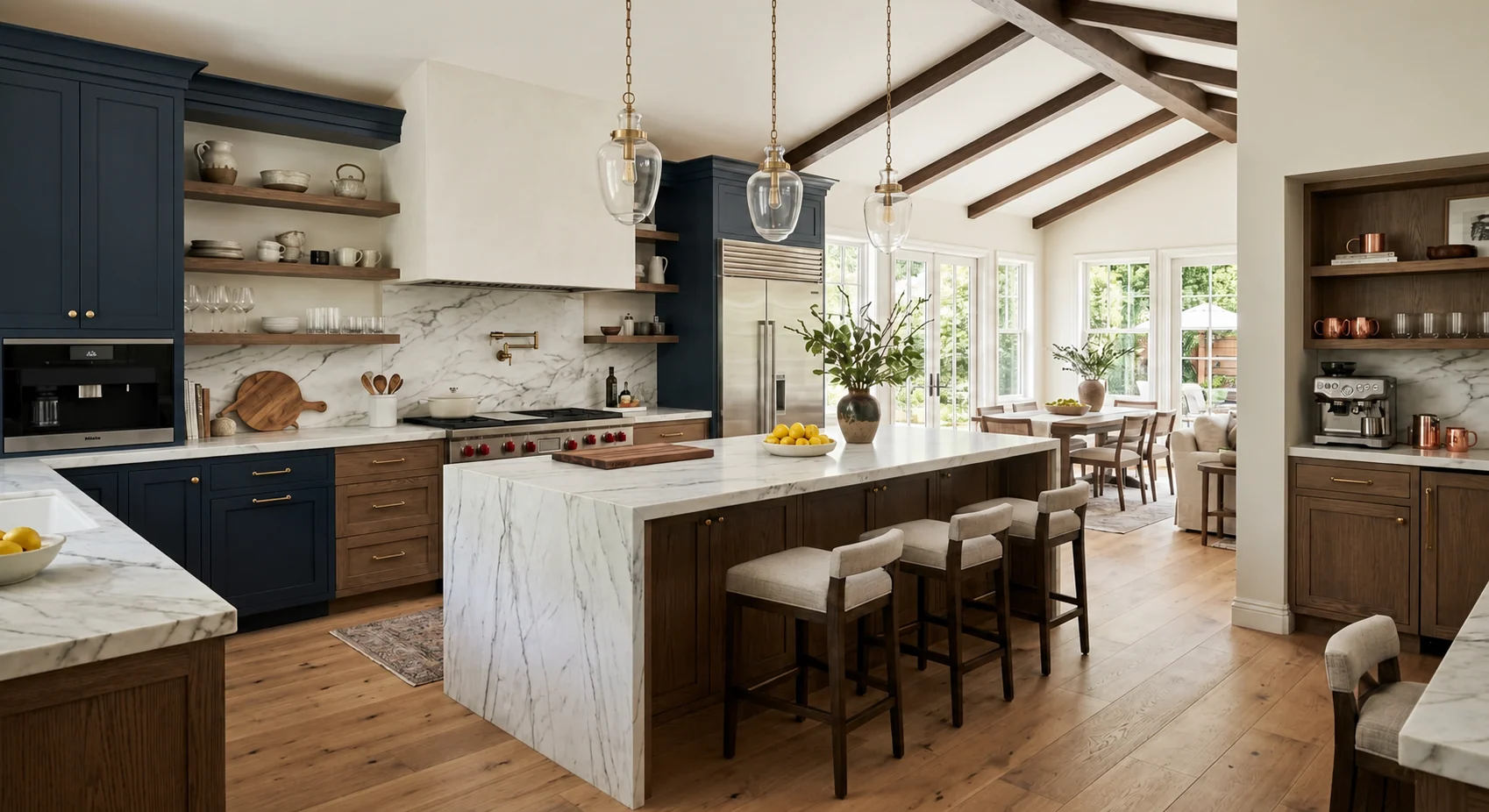
Worn cabinet doors, faded finishes and outdated hardware can make an entire kitchen look tired, even when the rest of the room still works. Many homeowners then face a tough question about whether a surface update will be enough or whether the cabinets need to go. Choosing the wrong option can mean spending more than necessary or ending up with a kitchen that still falls short.
Cabinet refacing is right when your cabinet boxes are solid and you like your current layout, since it updates doors, drawer fronts and exterior surfaces for less money and time. Cabinet replacement is the better choice when boxes are damaged, storage falls short or you want a new layout.
Full replacement remains a popular route, with nearly 7 in 10 homeowners replaced all of their kitchen cabinets during recent renovations. Comparing cabinet refacing and cabinet replacement side by side helps you choose the option that fits your kitchen remodeling goals and budget.
What Is Cabinet Refacing?
Cabinet refacing updates the visible parts of your cabinets while keeping the existing boxes in place. The frames are covered with a new veneer or laminate, and the old doors and drawer fronts are replaced with new ones.
A typical refacing project includes:
New cabinet doors
New drawer fronts
Veneer over cabinet frames
New hinges and hardware
Optional crown molding or trim
What Is Cabinet Replacement?
Cabinet replacement removes the existing cabinets completely and installs new ones. This option gives you full control over layout, storage, materials and style.
New cabinets generally fall into three categories:
Stock Cabinets: Pre-made sizes and styles that cost the least and arrive quickly
Semi-Custom Cabinets: Standard sizes with more choices in finishes, storage features and dimensions
Custom Cabinets: Built to fit your exact space, offering the most flexibility in design, size and materials
What Changes With Refacing vs Replacement: A Piece-by-Piece Comparison
The clearest way to see the gap between both options is to look at the individual parts of your kitchen. This table shows what stays, what changes and what may need attention with cabinet refacing and cabinet replacement:
Cabinet Part | Cabinet Refacing | Cabinet Replacement |
Cabinet boxes | Kept in place | Removed and replaced |
Face frames | Covered with new veneer | New frames installed |
Doors | Replaced with new doors | Replaced with new doors |
Drawer fronts | Replaced with new fronts | Replaced with new fronts |
Drawer boxes | Usually kept, upgrades possible | New drawer boxes included |
Shelves and interiors | Kept as they are | New shelves and interiors |
Hinges and hardware | Replaced | Replaced |
End panels | Covered with veneer | New panels installed |
Toe kicks | Covered to match | New toe kicks installed |
Crown molding and trim | Optional addition | Included with new design |
Countertops | Usually kept | Often replaced |
Backsplash | Usually kept | Often replaced |
Sink and plumbing | Stay connected | Disconnected and reset |
Flooring under cabinets | Left untouched | May need patching or leveling |
Layout | Stays the same | Can be fully redesigned |
10 Key Differences Between Cabinet Refacing and Replacement
Both options can transform the look of a kitchen, though they differ in cost, scope and long-term results. Here is how they compare in the areas that matter most, along with the winner in each one.
Difference 1: Cost
Cabinet Refacing: Costs significantly less because the existing boxes stay in place and fewer materials are needed. Most of the budget goes toward new doors, drawer fronts, veneer and hardware.
Cabinet Replacement: Costs more, especially with semi-custom or custom cabinets, since the price covers new boxes, removal, installation and often new countertops. Kitchen size, door style and material choices affect the final price for both options.
Winner: Cabinet refacing
Difference 2: Project Timeline
Refacing is often completed within a few days once materials arrive. Replacement follows a longer sequence that usually looks like this:
Order new cabinets and wait for delivery
Disconnect plumbing and remove countertops
Remove the old cabinets
Install and level the new cabinets
Template, fabricate and install new countertops
Semi-custom and custom cabinets can add several weeks of ordering time before step two begins.
Winner: Cabinet refacing
Difference 3: Daily Disruption
The two options affect your household very differently during the work. Here is what to expect:
Refacing: Kitchen stays partly usable
Refacing: Counters and sink remain in place
Replacement: Kitchen is out of service for weeks
Replacement: Temporary kitchen setup is often needed
Winner: Cabinet refacing
Difference 4: Layout Changes
Many kitchens look dated because the layout no longer supports the way a household cooks and moves. Refacing keeps the existing footprint, so it cannot fix a cramped work zone or add a new island. Replacement solves this problem by allowing new cabinet sizes, relocated work zones and a reworked layout.
Winner: Cabinet replacement
Difference 5: Storage and Function
Storage needs often decide the outcome for busy kitchens. Replacement offers more ways to improve function:
Pull-Out Storage: Roll-out shelves and pull-out trash bins make lower cabinets easier to use
Deep Drawers: Wide drawers for pots and pans replace hard-to-reach base shelves
Pantry Cabinets: Tall units add storage for food and small appliances
Specialty Inserts: Spice racks, tray dividers and corner solutions use space more efficiently
Refacing can add some new drawer boxes or inserts, though it cannot change the size or shape of the existing cabinets.
Winner: Cabinet replacement
Difference 6: Durability and Lifespan
Well-built cabinet boxes can last for decades, and kitchen cabinets are expected to last up to 50 years. Refacing takes advantage of that lifespan when the boxes are still sturdy.
Durability drops quickly once the structure fails, though. Replacement makes more sense when boxes show water damage, sagging shelves or weak joints that a new surface cannot correct.
Winner: Tie, depending on the condition of your existing boxes
Difference 7: Design and Style Options
Can you change the door style? Yes, both options allow new door styles, colors and finishes.
Can you change cabinet height or size? Only replacement allows taller uppers, deeper bases or new widths.
Can you add open shelving or glass-front uppers? Replacement makes these changes far easier, while refacing is limited to the existing cabinet openings.
Can you add built-in appliance panels? Replacement offers more flexibility for paneled dishwashers and refrigerators.
Winner: Cabinet replacement
Difference 8: Countertops and Backsplash
If your countertops are in good condition, refacing lets you keep them along with the backsplash, which helps control costs.
If your countertops are already worn, cracked or outdated, replacement becomes more appealing. Counters usually come off during cabinet removal and may not fit new cabinet sizes, so the project naturally includes fresh surfaces.
Winner: Cabinet refacing for budget, cabinet replacement for a complete refresh
Difference 9: Resale Value
Consider a homeowner planning to list a house next spring. Refacing gives the kitchen a fresh, updated look within days, which helps the home show well without a large investment. Another homeowner planning to stay for 15 years gains more from replacement, since better storage, layout and function add value they will enjoy long before any sale.
Winner: Cabinet refacing for a quick sale, cabinet replacement for long-term value
Difference 10: Waste and Environmental Impact
Refacing usually creates less waste because the cabinet boxes stay in your home instead of going to a landfill. This matters, since 600 million tons of C&D debris were generated in the United States in 2018, more than twice the amount of municipal solid waste.
Homeowners choosing replacement can still lower waste with a few simple steps:
Donate usable cabinets
Recycle metal hardware
Choose responsibly sourced wood
Reuse cabinets in a garage or basement
Winner: Cabinet refacing
Which Option Fits Your Situation?
Knowing the differences makes the choice easier, though the right option still depends on your kitchen's condition, your budget and your plans for the home. A quick self-check helps you match your kitchen to the best option.
Start With a Quick Self-Check
Answering these questions honestly points you toward the right option in a few minutes:
Are the cabinet boxes solid and free of water damage?
Does the current layout work for daily cooking?
Is there enough storage for your household?
Will countertops, flooring or lighting also change?
How long do you plan to stay in the home?
What budget and timeline can you manage?
Mostly "yes" answers to the first three questions usually point to refacing. Mostly "no" answers usually point to replacement.
Choose Cabinet Refacing If
Refacing fits kitchens where the structure works and only the look needs an update. It is the right choice when:
Cabinet boxes are solid and dry
The layout suits your routine
Countertops are in good condition
You need the work done quickly
You plan to sell within a few years
Your budget is limited
Choose Cabinet Replacement If
Some kitchens need more than a new surface. Replacement is the better option in these situations:
Damaged Boxes: Water damage, warping or broken frames weaken the cabinets beyond surface repair
Poor Layout: Work zones feel cramped, or traffic flow does not support daily cooking
Limited Storage: Existing cabinets lack the space or features your household needs
New Island or Footprint: You want to add an island, a pantry wall or a different layout
Full Kitchen Remodeling: New counters, flooring and lighting are already part of the plan
Long-Term Plans: You plan to stay in the home for many years and want lasting function
Choose Cabinet Refinishing If
Refinishing keeps the original doors and drawer fronts and updates them with paint or stain, often paired with new hardware. This approach costs the least of the three options and works well for solid cabinets with a door style you still like. Refinishing will not change the door profile or fix structural problems.
Consider a Combined Approach If
Some kitchens have mostly solid cabinets with one or two problem areas, such as a water-damaged sink base. Replacing the damaged units and refacing the rest to match can keep costs lower than a full replacement while solving the weak spots.
A new kitchen layout works best when storage is planned around the way you live. BH General Contractor plans cabinetry and storage around your room, your household and everyday routines, so the items you use most stay within easy reach.
Cabinet Refacing vs Replacement: Which One Wins Overall?
After comparing all 10 differences, neither option wins in every situation. The final scorecard looks like this:
Cabinet Refacing Wins: Cost, project timeline, daily disruption and waste reduction
Cabinet Replacement Wins: Layout changes, storage and function, and design freedom
Depends on Your Kitchen: Durability, countertops and resale value, which rely on cabinet condition and your plans for the home
The overall winner comes down to the condition of your cabinet boxes. Refacing is the winner for kitchens with sturdy cabinets and a layout that already works, since it delivers a fresh look for less money and less disruption. Replacement is the winner for kitchens with damaged boxes, limited storage or a layout that no longer fits daily life.
Planning Cabinets as Part of a Larger Kitchen Remodeling Project
Cabinets rarely change in isolation. Replacement often requires new countertops, since counters are removed during the process and may not fit new cabinet sizes. Flooring may also need attention if the new cabinet footprint leaves gaps or uneven areas.
Planning these elements together prevents repeated work and creates a more cohesive result. Lighting, backsplash and paint choices also look best when selected alongside the cabinet finish.
Cabinets, counters, lighting and finishes work best when they are planned as one room. Our team coordinates layout, cabinetry, counters and backsplash, lighting, flooring, painting and drywall within a single kitchen remodeling scope, giving your kitchen a connected finish from wall to floor.
Cabinet Decisions for Older Shaker Heights Kitchens
Many Shaker Heights homes have kitchens with original character worth respecting. Older homes bring a few extra factors to consider when choosing between cabinet refacing and cabinet replacement:
Original Built-Ins: Some older kitchens include built-in cabinetry that may be worth preserving or matching
Uneven Walls and Floors: Settled floors and plaster walls can affect cabinet fit and may require leveling during replacement
Soffits and Ceiling Heights: Older kitchens may have soffits that limit cabinet height unless they are removed
Architectural Style: Door profiles and finishes should suit the home's Tudor, Colonial or other original style
FAQs
Is cabinet refacing cheaper than replacement?
Yes, cabinet refacing usually costs less than full cabinet replacement because the existing boxes stay in place. Savings depend on kitchen size, door style and materials, though refacing often costs significantly less than new semi-custom or custom cabinets.
How long does cabinet refacing take?
Cabinet refacing typically takes a few days for an average kitchen once materials arrive. Since the cabinet boxes and countertops usually stay in place, the kitchen remains partly usable, which limits disruption for busy households.
Can you reface damaged cabinets?
No, refacing is not a good fit for cabinets with water damage, sagging shelves or weak frames. New doors and veneers only cover the surface, so damaged boxes should be repaired or replaced to support the new finish.
Does cabinet refacing change the kitchen layout?
No, cabinet refacing keeps your existing layout because the cabinet boxes stay in place. Small additions like new hardware, crown molding or an extra cabinet may be possible, but larger layout changes usually require replacement.
Can I replace some cabinets and reface the rest?
Yes, many kitchens use a combined approach. Damaged units, such as sink bases, can be replaced with new cabinets, while the remaining solid boxes are refaced to match, keeping costs lower than a full cabinet replacement.
Does new cabinetry increase home value?
Yes, updated cabinets can make a kitchen more appealing to buyers, especially when paired with new counters and lighting. Both refacing and replacement improve appearance, though replacement adds more value when it also improves storage and layout.
Do I need new countertops if I replace cabinets?
Yes, new countertops are often needed with cabinet replacement. Existing counters usually come off during removal and may crack or no longer fit new cabinet sizes, while refacing typically allows good-condition counters to stay in place.
What is the difference between refacing and refinishing cabinets?
Refacing replaces cabinet doors and drawer fronts and covers the frames with new veneer. Refinishing keeps the original doors and updates them with paint or stain, offering a lower-cost option for solid cabinets you still like.
Choosing the Right Path for Your Kitchen Cabinets
Cabinet refacing offers a faster, more affordable update when your cabinet boxes are sturdy and your layout already works. Cabinet replacement costs more and takes longer, though it gives you new storage, a better layout and a fresh start for the entire kitchen. Matching your kitchen's condition, budget and long-term plans to the right scenario makes the decision much clearer.
Expert guidance helps you choose with confidence. BH General Contractor works on kitchen remodeling projects across different home eras, from Tudor and Georgian Revival homes to mid-century ranches throughout Shaker Heights and Cuyahoga County. Request a free estimate to talk through your cabinet options and plan a kitchen that fits the way you live.